APPLIED DIGITAL LEARNING JOURNEY&BLOG
Innovate, Teach, Iterate
Growth Mindset
What is a Growth Mindset?
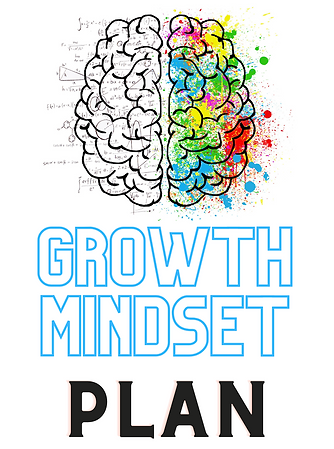
"The growth mindset is the belief that abilities can be cultivated" (Dweck, 2007). An individual who takes on a growth mindset believes that they can grow their brains through hard work, learning from mistakes, using feedback to improve, and embracing new challenges. Our inner voices that tell us we can, or tell us we can't have been around long before the research from social psychologist Carol Dweck. However, since her book Mindset was published, there has been a movement to practice growth mindset in schools.
Decades of science research supports that effort leads to higher achievement. Educators can influence student's mindsets with encouraging effort, process, and growth through thoughtful feedback and praise.
“ I am always doing what I cannot do yet, in order to learn how to do it.”
-Vincent Van Gogh
If you don’t give anything, don’t expect anything. Success is not coming to you, you must come to it.
― Marva Collins
Why is Growth Mindset Important to Teach ?
A growth mindset can fuel students’ desire to learn and exert effort because students will realize it is the way to achieve goals and grow. It can also squash limited beliefs like, people are born smart. It can help students to accept mistakes and use mistakes as opportunities to grow. Having a growth mindset can also help students to use feedback as an opportunity to grow and encourage students to take on challenges with confidence.
Research supports the idea that educator mindsets may influence the way they respond to students, which in turn has an impact on the students’ outcomes.When educators use specific types of praise, like praising the process, they can guide students towards embracing growth.
Growth Mindset Plan
First, take a survey to assess what your students believe about learning and intelligence. This will provide information about their current beliefs and some insight into if they lean towards a fixed mindset or a growth mindset.
Part I Build the foundation by introducing the growth mindset.
The theme is, You Can Learn Anything.
Research shows that your BRAIN can get STRONGER and SMARTER. When we learn something new, we create new connections between our neurons. We rewire our brains to adapt to new circumstances. This happens on a daily basis, but it is also something that we can encourage and stimulate.
Watch: Khan Academy-You Can Learn Anything
Read: You Can Grow Your Intelligence
Activity: Students will write down something they want to learn.
After they write it down, ask probing questions.
How long will it take you to learn this?
What problems might you run into that might make it challenging?
What will you tell yourself when you feel like quitting?
Students will be introduced to the power of YET and write
their yet statements at the end of what they want to learn.
Watch: Neuroplasticity
Read: Your Fantastic Elastic Brain, by JoAnn Deak, PH.D.
Next, Introduce the fixed mindset versus the growth mindset.
FIXED MINDSET VS GROWTH MINDSET
-
believes intelligence and talent are fixed
-
avoids challenges
-
gives up easily
-
sees efforts as fruitless
-
ignores all feedback
-
feels threatened by the success of others
Video: Growth Mindset vs Fixed Mindset
Activity: Students will write down thoughts they tell themselves when they make mistakes.
They can do this anonymously though padlet or sticky notes. Then have students rewrite, or flip the script to have a growth mindset. The new growth mindset phrases will be an anchor to help them when they need to make a choice to use a growth mindset inner voice.
Part II Growth Mindset in Action
-
believes intelligence can be developed
-
embraces challenges
-
persists in the face of setbacks
-
sees efforts as the path to mastery
-
learns from feedback
-
finds lessons and inspiration in the success of others
Activity:
Share a personal story where you struggled and how you persevered. Have students write scripts where their growth mindsets are talking to their fixed mindsets. Make sure to give an example of a script from your personal experience.
When students complete scripts then they work with a partner to read aloud. One person will be the fixed mindset and the other person can be the growth mindset.
This activity will teach students the growth mindset in action 4 steps and give them an opportunity to practice it.
Students can also write scripts that go with this video to help them persevere when making mistakes before succeeding.
Video: Pip the Guide Dog
The video does not have words. Students can write the script of what the dog was thinking though his failures and training.
Part III Continue to Notice it, Model it and Practice it
Now that the foundation has been set and students have had time to practice it, it must be modeled and practiced continuously. Extensions to the plan would be to have students set goals and share their growth with them. Students can keep journals of their growth. Also, give feedforward and have students contribute to the changes they would like to see. For the growth mindset to work, it must be used frequently, genuinely and with fidelity.
Fostering a growth mindset in your students will help them in many aspects of their lives and learning.
Students will need a growth mindset as they work on the project based learning models in their classrooms and navigate the new blended learning model.

Walk the Talk
An educators own mindset can highly impact students and colleagues. My own students are always surprised when I share with them that I struggled in math because that is what I teach. I tell them I like it because it didn't come easy to me, but that wasn't always the case when I was younger and would try to avoid it. My grandfather, a retired educator and science lover, wrote me a letter in college that said my studies could be compared to the laws of physics, for every action there is a reaction. He felt that I needed to exert more force to get better results. He was my first guide towards a growth mindset. He always had wonderful advice, and it was geared towards mindset and hard work.
Having a growth mindset as I work through the ADL program will help me to power through and grow to be an innovator and positive influence on others. The meaningful work in the courses helps me to positively work towards my goals even when I feel challenged creatively, or don’t feel that I have clarity yet.
Being a part of the program has helped me with my own growth mindset. I was a bit skeptical about my ability to do well in the program while working full-time in a demanding job. Being a student again has given me an opportunity to go easy on myself when I don’t feel that I did the best job on an assignment. It has also given me an opportunity to see my own growth and appreciate learning again. I feel really grateful for the feedback I receive and see it as an opportunity to learn and grow rather than see myself as a failure for minor mistakes. Beating oneself up is exhausting and should be replaced with seeing the good and being patient with oneself. Seeing other students' perspectives and growth gives me the space to cheer on others success.
I have enjoyed seeing fellow students growth through their eportfolios and discussions.
Reaching the end goal of graduation will be influenced by what I have learned about the growth mindset. While continuing to work on my innovation project, I will be reminded to persevere and continue to conjure up the kind voice and positive mantras versus the inner saboteur. I want to continue to create significant learning environments and it takes hard work.
Additional Resources
Books
Rosie Reveer Engineer, by Andrea Beaty
The Book of Mistakes, by Corinna Luyken
My Strong Mind: A Story About Developing Mental Strength by Niels Van Hove
I Can't Do That, Yet by Esther Cordova
Videos and Lessons
Khan Academy: Elementary and Middle School Activities
Articles, Visuals, and More
Complete Mindset Kit by PERTS, a complete guide to the growth mindset
References
Dweck, C. S. (2006). Mindset: The New Psychology of Success. Ballantine Books.
Jeffrey, S. (n.d.). Change Your Fixed Mindset into a Growth Mindset [Complete Guide]. Scott Jeffrey. Retrieved February 5, 2022, from https://scottjeffrey.com/change-your-fixed-mindset/