APPLIED DIGITAL LEARNING JOURNEY&BLOG
Innovate, Teach, Iterate
UBD-Understanding by Design
Begin with the End in Mind
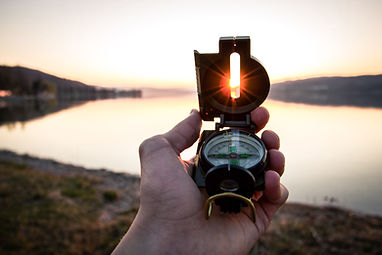
Backwards design is a common framework used by educators to design units of instruction. It is a way to plan more purposefully with the end goal in mind. It is a conceptual framework that centers on the big ideas and important performance tasks with the bigger picture always considered. It is important for educators to have a clear picture of where they want their learners to go before creating the pathway to get there. Educators spend a good amount of time unpacking the learning standards to fully understand what we want learners to understand. The three main steps are to identify desired results, determine acceptable evidence, and plan learning experiences and instruction. The backward design template I am using is the UbD template.
Heading 3
Stage 1-Desired Results
Established Goals:
Learners will develop an understanding on the role an organism plays in its ecosystem.
Learners will synthesize information about organisms in their environment through reading and research.
Learners will participate in a simulation of a local food web.
Learners will develop a plan to help local organisms in their habitat.
Transfer
Students will be able to independently use the learning to understand that nature exists in a delicate balance wherein all creatures struggle for survival. When the balance is upset by overpopulation or human intervention, gaps are created in the local food web, which ultimately lead to a decline in the entire ecosystem. Every organism plays a key role for the ecosystem to function correctly.
Meaning
UNDERSTANDINGS
Students will understand the following concepts:
One of the basic needs of all organisms is the need for energy.
The flow of energy in all ecosystems can be traced back to the sun.
Changes in the ecosystem will affect the flow of energy in a food web.
Changes in an ecosystem that affect one population will have an effect on all populations within the food web.
Human impact can affect ecosystems.
ESSENTIAL QUESTIONS
What are producers, and what do they need to make their food?
What are consumers, and where do they get their food?
What is a food web and how does it differ from a food chain?
How do changes in an ecosystem affect a food web?
How can removing a key organism from a food web cause an ecosystem to collapse?
How can we help organisms to survive in their environment?
Does human behavior impact local food webs?
Acquisition
Students will know how to
Make connections in the ecosystems between living things.
Research and read to gather information on an organism and ecosystem in their local habitats.
Share knowledge and communicate with peers about the information they have discovered.
Display their presentation in a visually organized way.
Create a presentation on their organism.
Plan out how they can help the organism to survive in its environment.
Students will be skilled at
Critical thinking, as they analyze and evaluate their research.
Identify and describe their organism from the research.
Use educational technology to research their organism.
Incorporate science vocabulary in their writing.
Stage 2-Assessment Evidence
Evaluate Criteria
Assessment Evidence
After selecting an organism from a local habitat, learners will use their research and prior knowledge to create a google slide presentation.
Students will create a rough draft summarizing what they have found out about human impact and their organism and what their plan is to help.
Students will complete a self-assessment about their project.
PERFORMANCE TASK(S):
Learners will choose an organism from local habitats.
Learners will research their organism and collect information on their organism on a chart provided.
Learners will present their information in a presentation.
Learners will create a plan to help their organism to continue to thrive in its environment.
Learners will present their plan and presentation to the class.
Stage 3-Learning Plan
Summary of Key Learning Events and Instruction
We will watch a video on gray wolves and their introduction back to Yellowstone National Park. We will participate in a simulation of a local food web. Afterwards, students will choose a local organism to research.
Using the research, students will make a presentation to share with the class about their organism and the effects of human impact on its survival. Students will come up with a plan on how they can help the organism survive in its environment. Students will present to the class.
WHERETO
W=. Learners will present information on a local organism in its ecosystem. They will present how human impact has an effect on the organism and devise a plan on how to help. Students will show an understanding of when the balance is upset by overpopulation, or human intervention, gaps are created in the local food web, which ultimately lead to a decline in the entire ecosystem. Where students are going and why will be presented in a driving question at the beginning of the PBL.
H=
I will hook students with the gray wolves in Yellowstone video and how important every organism is the the ecosystem. The hook will also be how they can make a difference and to help limit human impact.
E=
I will equip learners with technology, resources, and local examples of food chains and organisms in the local ecosystems. I will also give examples of how we can lessen human impact on local ecosystems. Students will be provided with rubrics, guides, and scaffolds to organize their research and complete their presentations.
R=
Students will reflect, revisit, revise, and rethink on their learning by:
peer editing
filling out a reflection sheet on their learning
reflecting on how ecosystems might be affected in the future
E=
Students will express their understandings by presenting to their peers. After the presentation, students will complete a simplistic self-evaluation based on following the rubric for communication.
T=
Tailoring instruction to the needs of all learners will address the unique strengths of the individual. I will assist students on their research to find information on their reading levels. Scaffolds will be provided with sentence stems to help convey information about their organism. Examples of slides and organization will be provided. Presentations will be modeled before students present.
O=
Organizing learning experiences so students move from teacher-guided concrete activities to independent application that will emphasize conceptual understanding will be meet with clear learning intentions and success criteria through out the unit. Direct teaching of unit vocabulary and key concepts will be delivered and understood before students choose the organism for their research and presentation. Students will have opportunities to explore ecosystems and different food chains before narrowing it down to the local ecosystems. Students will be given many examples of human impact and disruptions in ecosystems. Students will have an understanding of cause and effect.
UbD design vs 3 Column Table
Both the Ubd design and the 3 column table are effective organizational tools to ensure that educators are using an effective backwards design model with the goal of the end in mind. It is helpful to have tools to craft the best learning experience for students. These design templates help build the roadmap to the end destination.
In order to create significant learning environments where students are at the center of the learning it requires thoughtful planning ,so students are able to connect the dots themselves. I prefer the UbD template because I found it would be most helpful with planning for project-based learning. It includes the reflection component and presentation that is important to PBL. I liked that it included essential questions and understandings. In a PBL model, we create a Knows and Needs to Knows with the students at the beginning of projects. This gives the teacher and idea for building the road map. This is so important to effective planning. It is also important to ask questions that will lead to more student questioning about the subject matter with the hook.
I liked that we started with a 3 column table and then went on to a more detailed template. I can also see myself using both for planning and starting with a 3 column table and then diving deeper into the planning with the UbD template. Beginning with the Big Hairy Audacious Goal (BHAG) was a pertinent approach to think about the end goal of where I want students to go. Using the Ubd template to design PBLs will increase my ability to design higher quality instruction. The design process can easily feel overwhelming and daunting at the beginning. However, organizing the planning in an effective way that provokes thinking and clarity makes it less so.
If better design lends itself to better learning experiences and student performance, then I am all in. My reflection on this experience with both templates is positive. Backward design is not new to me. However, I saw this as a refresher in best practices on being intentional and taking the time to think about the learning journey I want students to go on. Speaking of time, I think it is sometimes the biggest barrier educators in the K-12 classroom have working against them. Intentional planning takes more time than teachers are given during their working hours and time with their professional learning communities. Fortunately, these templates are time savers for planning more effeciently.
References
Bowen, R. S. (2017). Understanding by Design. Vanderbilt University Center for Teaching. Retrieved April 26, 2022 from https://cft.vanderbilt.edu/understanding-by-design/
Fink, L. D., PhD. (n.d.). A self-directed guide to designing courses for significant learning. Retrieved from https://luonline.blackboard.com/bbcswebdav/
pid-3042999-dt-content-rid-30108308_1/courses/13583.201810/Self-Directed%20Guide%20to%20Course%20Design%20-%20Fink%20Summary.pdf
Wiggins, G. P., & McTighe, J. (2005). Understanding by design. Alexandria, VA: Association for Supervision and Curriculum Development.